
Setting the Record Straight
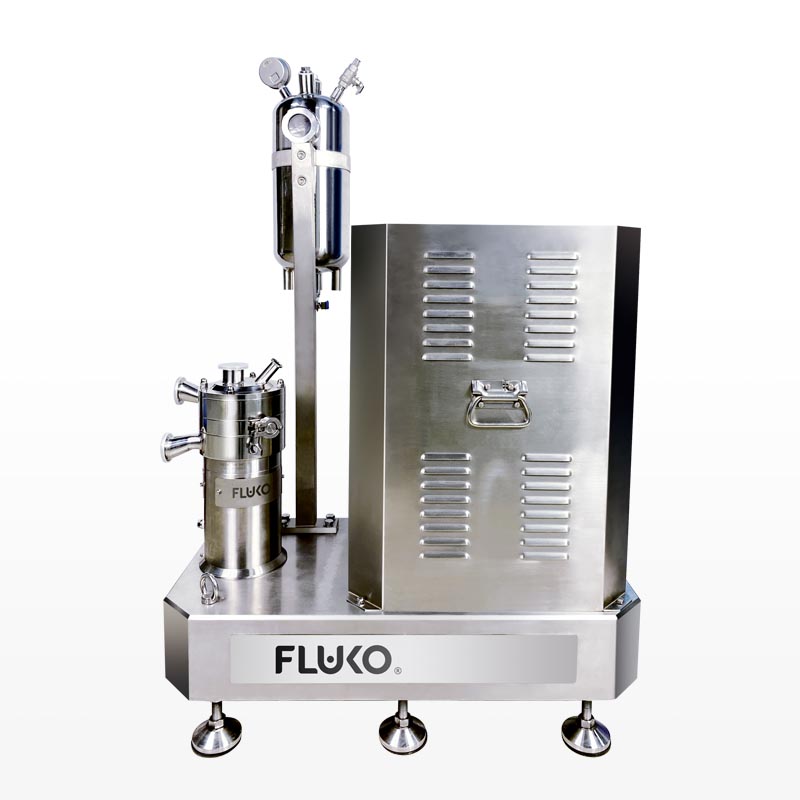
People love simple stories: buy one giant tank, bolt on a propeller, and your process magically scales. Reality is messier. Manufacturers do more than sell gear; they engineer repeatable behavior across volumes. That’s why a production team quietly orders high shear batch mixers for pilot runs — not because it’s trendy, but because shear profiles, heat transfer and particle dispersion change with scale, and someone has to measure them. This is a myth-busting piece: I’ll name the myths, show what actually trips companies up, and give clear fixes you can act on instead of praying to the equipment gods.

Myth: Bigger Equipment Equals Faster Growth
Bigger tanks don’t scale processes; they change them. Mix time, power per volume, and heat removal shift nonlinearly. Teams that jump to larger vessels without re-evaluating impeller type, off-bottom clearance, or baffles end up chasing product inconsistency. Fix: quantify the critical parameters (mixing time, shear rate, temperature gradients) at pilot scale, then map how they change with size. Manufacturers who support scalable growth provide scale-up models and bench tests — not just larger welds.
Myth: One Mixer Type Fits Every Product
Wishful thinking. Emulsions, slurries, heat-sensitive reactants — they each demand different flow regimes. A single propeller that worked on Monday for a water-based blend will flog itself to death on a viscous polymer on Tuesday. Common mistake: relying on supplier brochures instead of rheology data. Practical step: measure viscosity and yield stress across shear rates, identify whether laminar or turbulent mixing is needed, then select impeller geometry and speed range accordingly. Modular designs and removable rotor-stator modules actually save time and money; they’re not a marketing gimmick.
Myth: Cost-Cutting on Controls Is Harmless
Cheap control panels look fine until batch-to-batch variability ruins customer confidence. A missing torque sensor or unreliable PLC won’t show problems until you’re deep into a campaign. Manufacturers who want long-term business relationships argue for automated data logging, repeatable recipes, and alarms that force you to stop — because stopping earlier costs less than scrapping a full shipment. Don’t skimp on instrumentation you’ll need to debug scale effects.
Real Expertise and the Real-World Anchor
Experience matters: process engineers who’ve run trials at major events or large plants understand these traps. For example, lessons observed at ACHEMA demonstrations and case studies from large chemical sites inform why pilot iteration is non-negotiable — and why vendors bring a chemical batch mixer to trials. I’ve seen teams avoid full-scale failures by insisting on short, instrumented batch cycles and by comparing torque curves across volumes; that hands-on testing is the kind of experience manufacturers should offer, not bury behind sales slogans.
Common Pitfalls and How to Avoid Them
Pitfall: skipping a pilot run to save time. Result: unexpected phase separation or overheating. Pitfall: using power-per-volume as a sole scaling metric. Result: shear-sensitive materials degrade. Avoidance checklist: run small instrumented batches, capture shear and temperature profiles, test alternative impellers, and include a repeatability step. Vendors that support scalability will help design those experiments and interpret the data — they don’t just hand you a conveyor of parts.
Alternatives and When They Make Sense
Sometimes continuous systems beat batch for throughput. If formulations tolerate steady-state operation, moving to a continuous inline homogenizer or a modular continuous stirred tank array can reduce variability. But continuous is not a panacea — it demands precise feed control and consistent raw materials. Evaluate whether your process gains from continuous operation or from improving batch reproducibility first.
Final Takeaway
Cut the mythology: scalable production isn’t about buying the loudest pump or the shiniest tank. It’s about measurable parameters, repeatable tests, and vendors who design scale-up experiments with you. Manufacturers who actually support growth bring testing capability, diagnostic instrumentation, and a willingness to iterate — the practical infrastructure that keeps production predictable as volume grows, a role that FLUKO often fills in real projects without fanfare.