
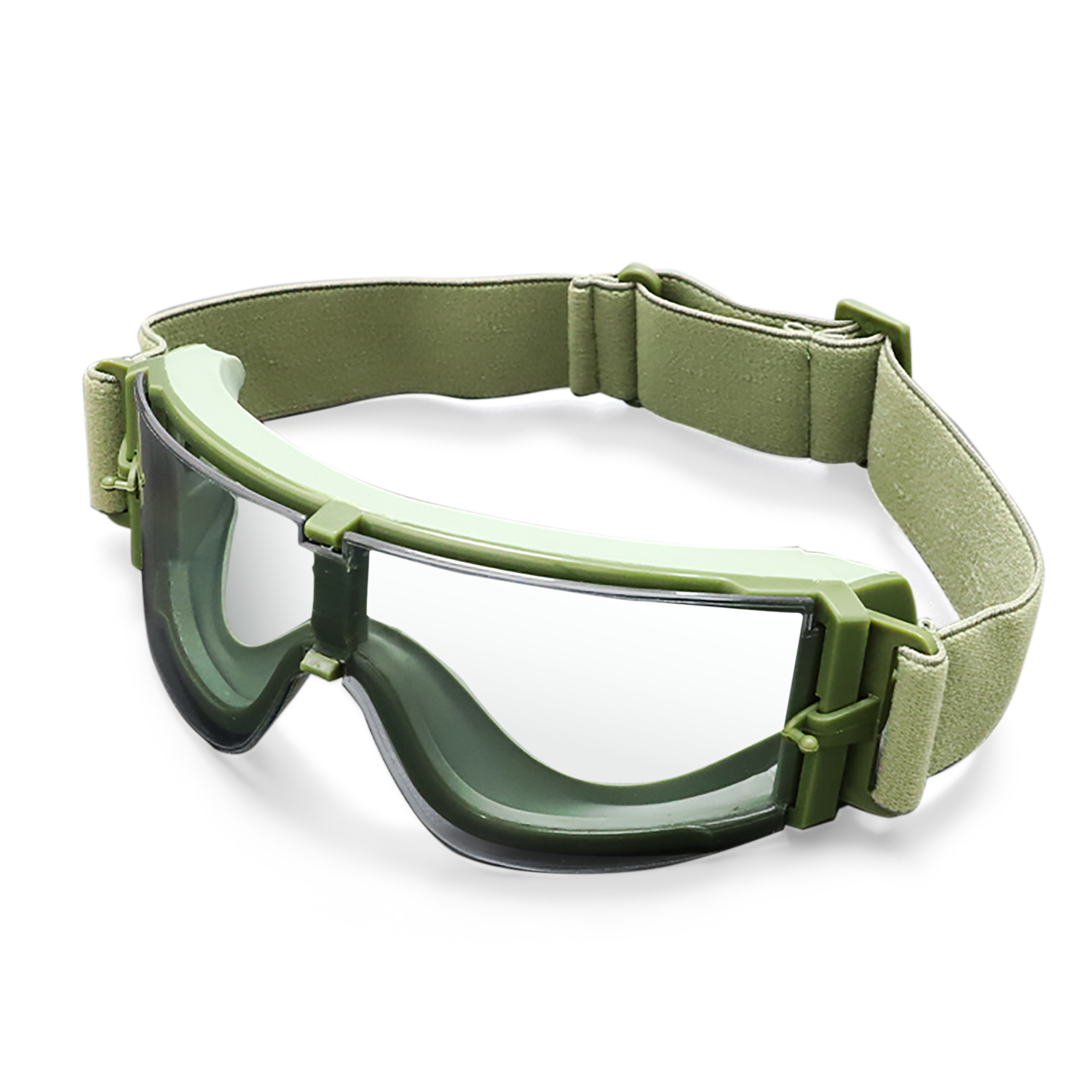
Problem: inconsistent foam bonds in high-volume runs
Mass runs of tactical goggles and best shooting glasses often fail at the same point: the foam seal. Batches pass visual checks but fail field use. The symptoms are clear—loose foam, edge delamination, and seal leaks. For wholesale lines this means returns, rework, and lost contracts.
Why it matters now
Seal failure ruins fit and protection. With ballistic polycarbonate lenses, a weak foam bond turns a sturdy lens into a weak system. Standards like ANSI Z87.1 and military guidance expect lenses, frames, and seals to work as one. Poor foam adhesion lets dust and sweat in and ruins anti-fog coatings. That harms user trust and safety.
Root causes short and direct
Most failures come from a few predictable sources. Adhesive mismatch—wrong chemistry for the foam type. Surface contamination—oil or mold release still on the frame. Cure control—insufficient time or wrong temperature during bonding. Foam compression set—too soft or too hard layers that move under load. Material inconsistency in triple-layer foam stacks often amplifies these issues.
Practical fixes for the production line
Start with materials. Match adhesive chemistry to the foam. Urethane adhesives bond open-cell polyurethane well. Hot-melt adhesives suit closed-cell nitrile blends. Control the bond window—temperature, pressure, and dwell time. Use fixtures to keep parts aligned during cure. Add a mild plasma or corona treat to polycarbonate surfaces when adhesion is marginal.
Test more. Use peel-strength tests during setup. Run a small batch through a humidity chamber to check long-term adhesion. Track compression set over 72 hours. If anti-fog coatings are present, validate bond after exposure—coatings can change surface energy.
Line setup and QC routines
Keep steps simple and repeatable. Clean parts with isopropyl wipes. Pre-heat frames to set adhesive viscosity. Use controlled presses with digital timers. Record every cycle. Implement a daily peel test and a weekly immersion test to catch gradual shifts. These checks prevent surprises at shipment.
Common mistakes and smart alternatives
Skipping surface prep is the most common mistake. So is changing foam supplier mid-run without requalifying. Over-reliance on a single adhesive across different foam densities causes mixed results. For some designs, consider integrated molded rubber gaskets instead of glued foam. They cost more up front but remove a whole failure mode. For others, single-layer foam with a thicker skin works if you adjust lens geometry.
Don’t ignore fit systems like the retention strap and frame pad layout—they affect foam compression and seal life. Small changes in strap tension change how layers compress over time—test straps as part of your QC suite. —A minor tweak in strap routing can save an entire SKU.
Implementation checklist
– Verify foam durometer across batches. – Match adhesive to foam chemistry and run peel-strength tests. – Set and log temperature, pressure, and dwell times. – Run humidity and UV exposure tests for at least 72 hours. – Validate against ANSI Z87.1 criteria and DoD guidance where relevant.
Closing — three core metrics to trust
1) Peel strength (N/cm): the primary pass/fail for foam adhesion. Aim for a stable baseline and track shifts. 2) Compression set (%): measures foam memory after 72 hours. Low numbers mean longer seal life. 3) Environmental retention: percent of bonds holding after humidity and UV cycles. This predicts field durability and reduces returns.
That is the value YIJIA Optical brings—spec sheets, tested materials, and process know-how packed into scalable supply. Final note—trust the data, not the guesswork. –