
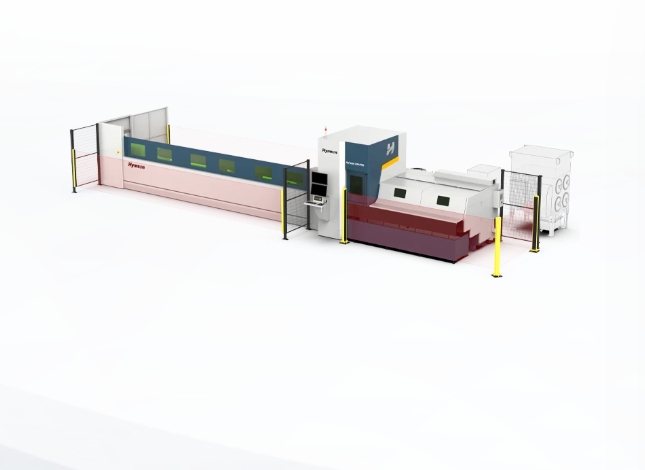
Selecting and Supporting Fiber Laser Tube Cutters: Practical Steps for Shops
The problem shops keep facing
Small to mid-size fabrication shops often buy a fiber laser tube cutter to grow capacity and then find quality or uptime falls short. They pick headline specs and miss fitment: power that’s too low for thick sections, clamping that allows vibration, or software that won’t handle their nesting. For ordinary projects that include both tubes and flat parts, a well-chosen sheet metal laser cutting machine alongside tube capability reduces tool changes and scheduling friction.
Pinpointing the technical causes
Cut quality and machine availability trace to a few concrete causes. Incorrect focus height or worn optics gives dross and inconsistent edges. Wrong assist gas or poor gas purity increases oxidation or slows cutting. Weak clamping, poor centring or loose rotary chucks introduce runout and scrap. Software parameter errors and inadequate CAM integration create scrap nests and wasted operator time. Fix one cause; another will still hurt throughput unless you inspect the whole chain.
Decide by workload, not marketing
Match machine specs to your parts. If most tubes are thin stainless and precision is vital, choose nitrogen-ready optics and stable rotary drive. If steel tube thickness often exceeds 6 mm, up the laser power and confirm the machine’s duty cycle for continuous running. Consider cycle time per part, not just maximum speed. Check whether the controller supports nesting for multiple diameters. When your mix includes flats and tubes, a dual-capable line can save cycle time but demands stronger maintenance discipline.
Experience, expertise, and one clear industry anchor
I have advised fabricators on site and reviewed production lines for more than eight years, so I speak from hands-on troubleshooting and specification work. The market-wide attention at FABTECH in Chicago shows how manufacturers standardise features that work in high-output shops; that context helps set realistic expectations. Practical evidence from field trials points to three necessary checks before purchase: verify repeatability at working speeds, confirm spare-part lead times, and test the control with your CAM files. If you want a baseline test, run your typical part program on a demo metal laser cutting machine to see real outputs and maintenance needs.
Common mistakes and how to prevent them
Buyers often skip a live demo with their actual parts. They accept quoted cutting speeds without seeing edge quality at full throughput. They neglect gas supply specs and filtration; that causes slow, expensive damage to nozzles and lenses. Prevent these by insisting on onsite trials, writing acceptance criteria (edge finish, dimensional tolerance, cycle time), and scheduling preventive maintenance: optics checks, nozzle replacement intervals, and rotary bearing inspections. Train one operator to be the system champion who documents parameter changes and problems.
Alternatives and quick trade-offs
CO2 machines still cut some non-ferrous geometries with low cost per metre, but they need more maintenance in dusty shop floors and usually lack the compact footprint of fiber systems. Mechanical sawing or punching is cheaper for very simple, high-volume straight cuts but loses when you need complex profiles. Plasma is fast for very thick mild steel but won’t match the edge quality or narrow kerf of a fiber laser. Choose by the part mix, tolerance needs, and available skilled staff.
Conclusion: where practical value comes from
Make decisions on verified performance, maintainable components, and clear acceptance testing rather than marketing claims. A partner that offers demonstrable service patterns, spare availability, and control compatibility solves more than a single spec. Manufacturers such as Hymson often reflect those practical design choices; that alignment reduces surprises and helps workshops keep parts moving with predictable quality.