
Setting the Room: Where Clarity Starts and Stops
People speak. Systems stumble. Meetings drift. A boardroom fills at 9:00, tablets wake, and a tabletop microphone blinks at every seat. A paperless conference system should make this smooth. But many teams still juggle cables, apps, and resets. In one study window I saw, about 20–30% of the first minutes can vanish to setup delays. When latency climbs over 150 ms, talk-over grows. When RF interference spikes, confidence drops. So the blunt question is simple: why does a clean digital plan become a messy human moment?
Picture this: your board meets cross-border, slides stream fine, but speech sounds thin, or late, or both. People lean in. Notes go back to paper—funny how that works, right? We want data to guide us, not guesswork. Is the bottleneck the mic, the network, or the workflow? (It is often a chain.) Let’s walk the chain, step by step, and see where control returns to you.
The Real Problem with Tabletop Mics in “Paperless” Rooms
Why do tabletop mics struggle?
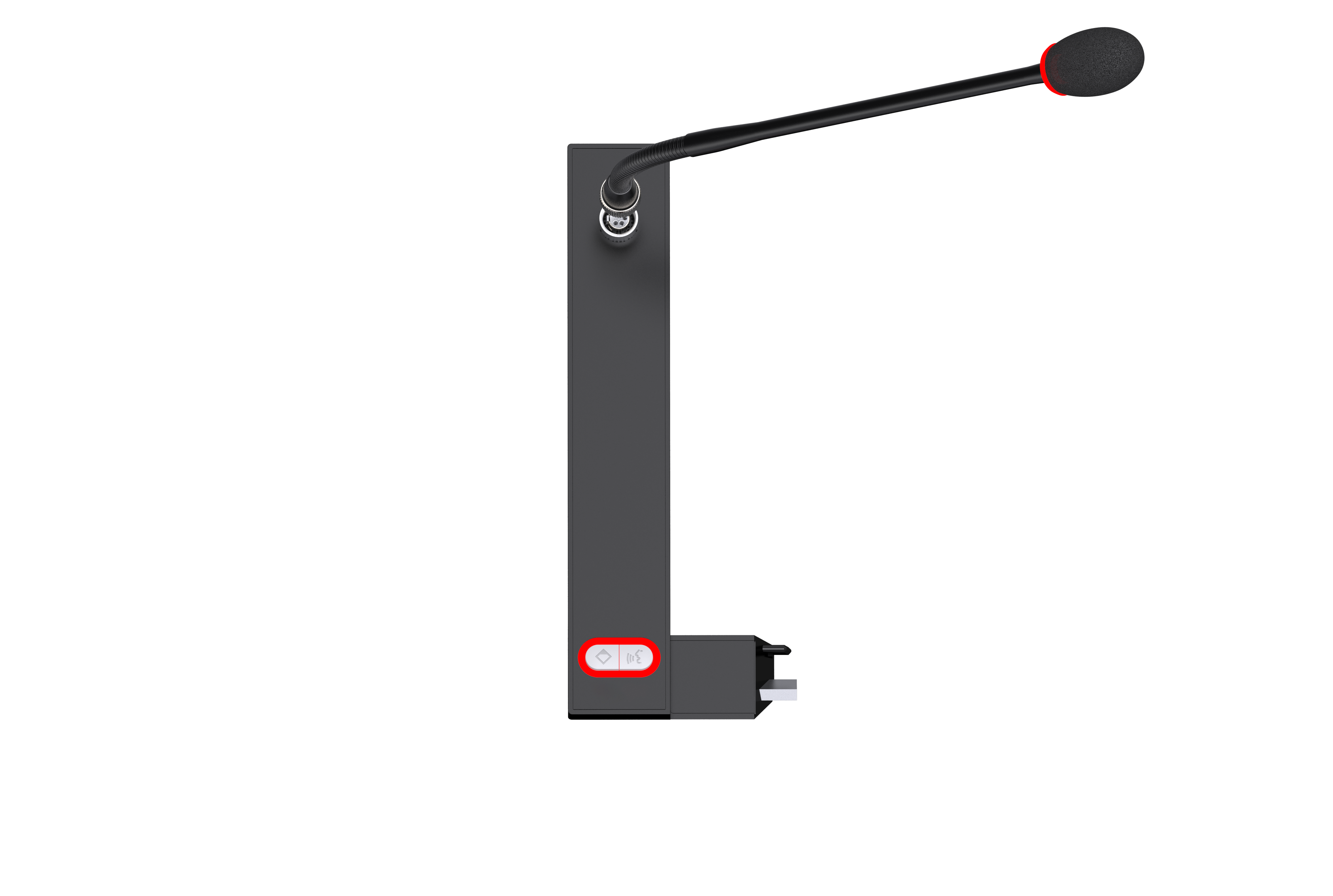
Legacy setups push a simple idea: put more microphones on the table and turn them up. In practice, rooms fight back. Gain before feedback shrinks when people sit close to loudspeakers. Cable runs add ground noise. Wi‑Fi gets busy, so packets drop. DSP then works too hard on echo and noise, while voices still feel far. Look, it’s simpler than you think: the mic is not alone; it lives inside an acoustic, electric, and network ecosystem. If any link is weak, clarity falls.
Classic fixes also hide traps. Fixed cardioid pickup can miss soft talkers off-axis. Open-too-many channels and the noise floor rises; close them and switching noise distracts. AEC needs stable reference paths; moving laptops confuse it. Even “wireless solves it” can fail when RF congestion meets metal tables. QoS rules on the switch may be wrong. Edge computing nodes at the table can help, but not if they add delay or lack proper clocking. And when power converters are under-rated, brownouts cause random reboots—right in the vote. That is why “more gear” is not the same as “more intelligibility.”
From Tangle to Trust: Principles That Fix the Mess
What’s Next
We shift from piling devices to designing flows. Start with new audio-over-IP principles that respect human timing. Keep end-to-end round-trip under 50 ms so turn-taking feels natural. Use network switches with strict QoS for media streams, and AES‑256 to keep channels private. Add adaptive beamforming so a single array behaves like many smart mics—no frantic gain rides. Then let edge computing nodes handle local AEC and auto-mix at the table, so packets reach the core already clean. One more layer: PoE with robust power converters, so you power less, but power right. Small detail, big result.
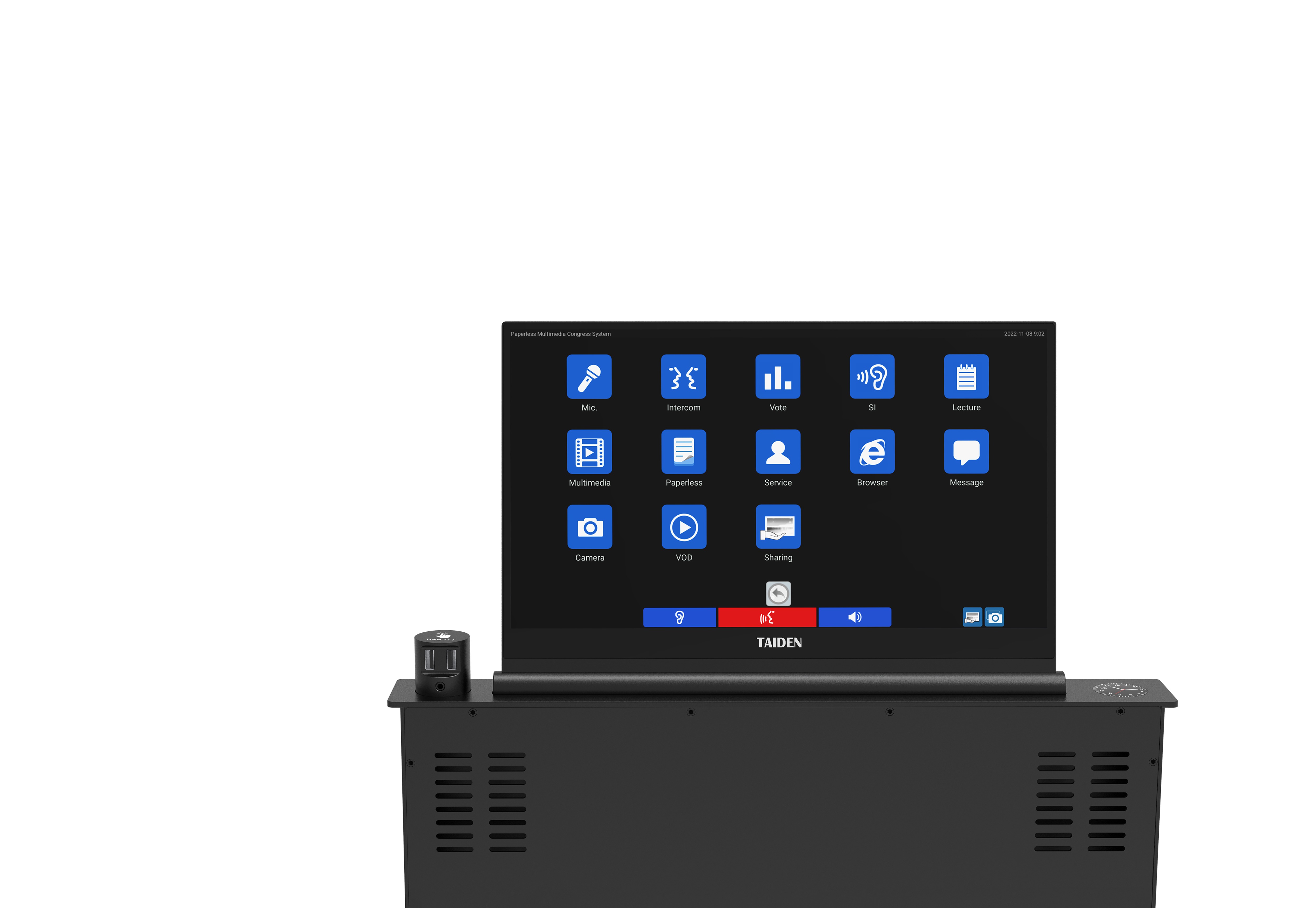
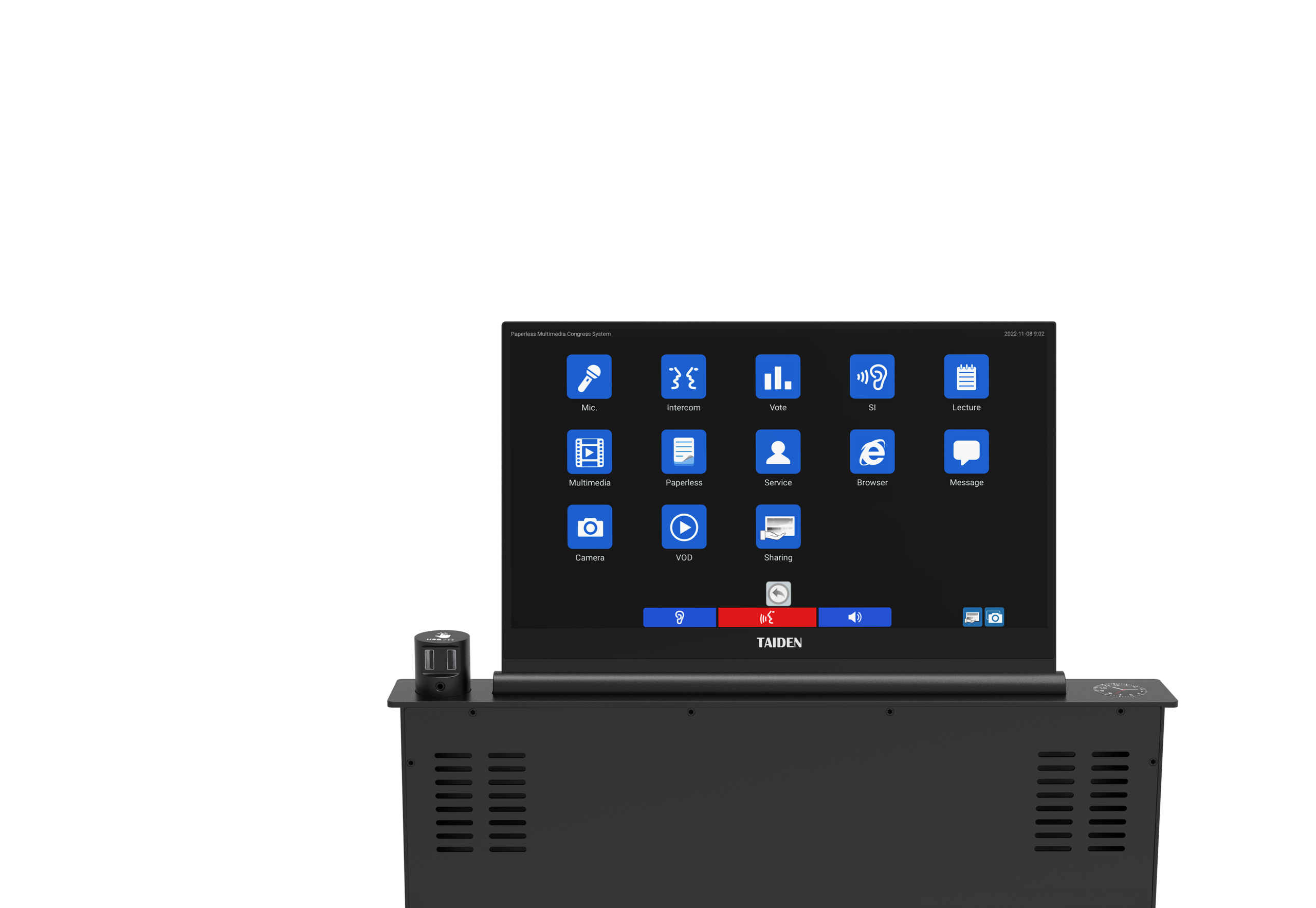
Now compare old versus modern “digital paperless conference equipment” such as digital paperless conference equipment that unifies mic control, voting, and document views. The old stack is a patchwork; the modern stack is a clocked system with device sync, health telemetry, and failover (ring or star, your choice). You get live metrics—latency, packet loss, and AEC stability—in one pane. No magic here, just discipline and better defaults—funny how that works, right? To choose well, use three clear metrics: 1) speech intelligibility target of at least STI 0.6 in your room, 2) verified packet loss below 0.1% with priority tags, and 3) uptime design for 99.99% with hot-spare paths. If your candidate system meets these in a pilot, keep it; if not, walk away. In short, we learned that clarity grows when acoustics, network, and power are one team, not three vendors. For deeper reading and practical implementations, see TAIDEN.