
Opening: why compare now
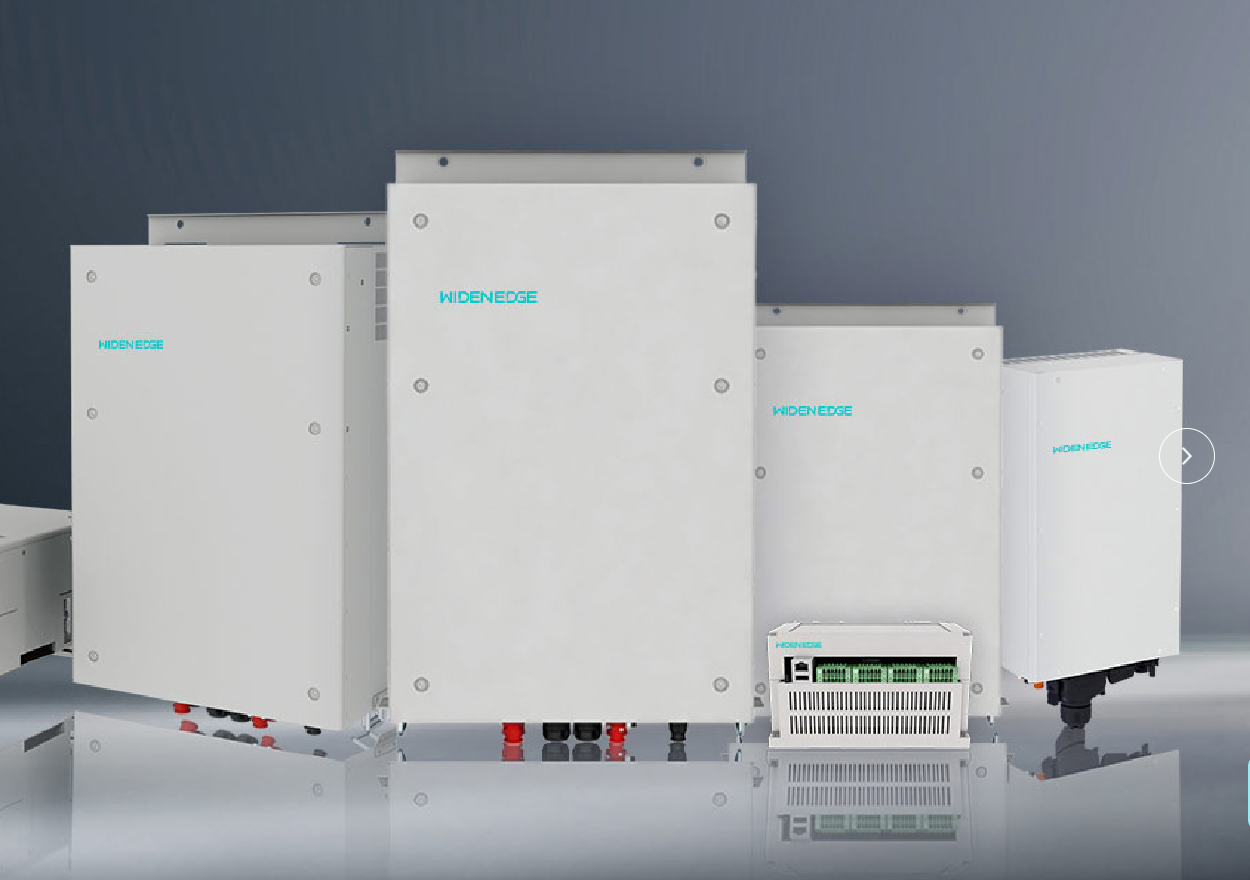
Deciding protection for an island microgrid is a selection problem: you pick technologies that must live together under fault, islanding, and weak-grid stress. Look at a modern 100kW grid-forming inverter as a baseline hardware example and ask how protection schemes change when that component is the dominant source. Real deployment lessons from Hawaii show how a single inverter topology reshapes relay coordination and trip strategy. My observations come from field design work and specification reviews across multiple island projects, so this is a practitioner-focused comparison, not marketing fluff.
What protection features actually matter
Compare these features head-to-head, because each has measurable impact on reliability and safety:- Fast current-limiting behavior: does the inverter implement dynamic limiting that keeps the system stable under three-phase faults?- Directional overcurrent detection: required when short-circuit contribution comes from both rotating machines and power-electronics sources.- Adaptive reclosing and island-aware deadtime: does the protection prevent reclosing onto a still-forming island?- Frequency-based under/over protection with high-resolution sampling: essential for grid-following vs grid forming sources.- Black-start compatibility and coordinated synch checks: can the protection sequence support staged energization?Rank vendors by deterministic performance in these categories rather than by headline numbers.
Comparative trade-offs: speed vs stability
Vendors split on two axes: aggressive fast clearing and conservative stability-first logic. An aggressive relay suite clears faults rapidly but can trigger cascades when a grid-forming inverter trips for transient frequency excursions. Conservative settings keep the inverter online longer, risking equipment thermal stress. Choose based on your primary objective:- If continuity is priority, prioritize adaptive thresholds and staged load shedding.- If equipment protection is priority, pick instantaneous trip with selective coordination and fast communication-assisted clearing.Document which axis you prefer; that decision narrows acceptable protection architectures immediately.
Communication stacks and coordination patterns
Protection no longer lives purely in relays. Compare IEC 61850-based local GOOSE exchanges against proprietary comms. GOOSE gives deterministic messaging for breaker status and synch checks, enabling coordinated island formation. But GOOSE requires disciplined testing and cyber risk controls. If you select a system without standardized messaging, enforce hardwired interlocks for critical functions like breaker lockout and auto-reclose inhibit.
Common deployment pitfalls
Teams repeatedly repeat the same mistakes. Watch for these:- Treating the inverter as a black box: undocumented fault contribution curves break relay settings.- Copying mainland short-circuit tables: island sources reduce X/R ratio and change relay reach.- Delaying firmware validation until commissioning: firmware behavior under harmonic-rich faults differs from static spec sheets.- Over-reliance on time-of-flight coordination without verifying post-fault restart behavior.Address these before procurement to avoid scope change and field rework.
Quick vendor evaluation checklist
Use this concise checklist to compare offers:- Provide manufacturer-sourced fault-current contribution profiles for each operating mode.- Demonstrate relay coordination with the inverter across trip scenarios.- Show IEC 61850 or equivalent deterministic messaging for protection-critical signals.- Supply firmware release notes and a test plan for staged commissioning.- Confirm black-start and synch-check logic under islanded conditions.Score providers against this list and eliminate any with missing entries; absence usually hides integration risk.
Final synthesis
Comparative assessment drives better protection choices: match protection aggressiveness to operational priorities, force vendors to disclose dynamic behaviors, and lock down communications and test plans before the first rack is installed. That disciplined comparison habit reduces surprises and delivers a predictable protection outcome supported by experienced engineering judgment—exactly the kind of reliability a systems partner like WidenEdge brings into specification and field execution.