
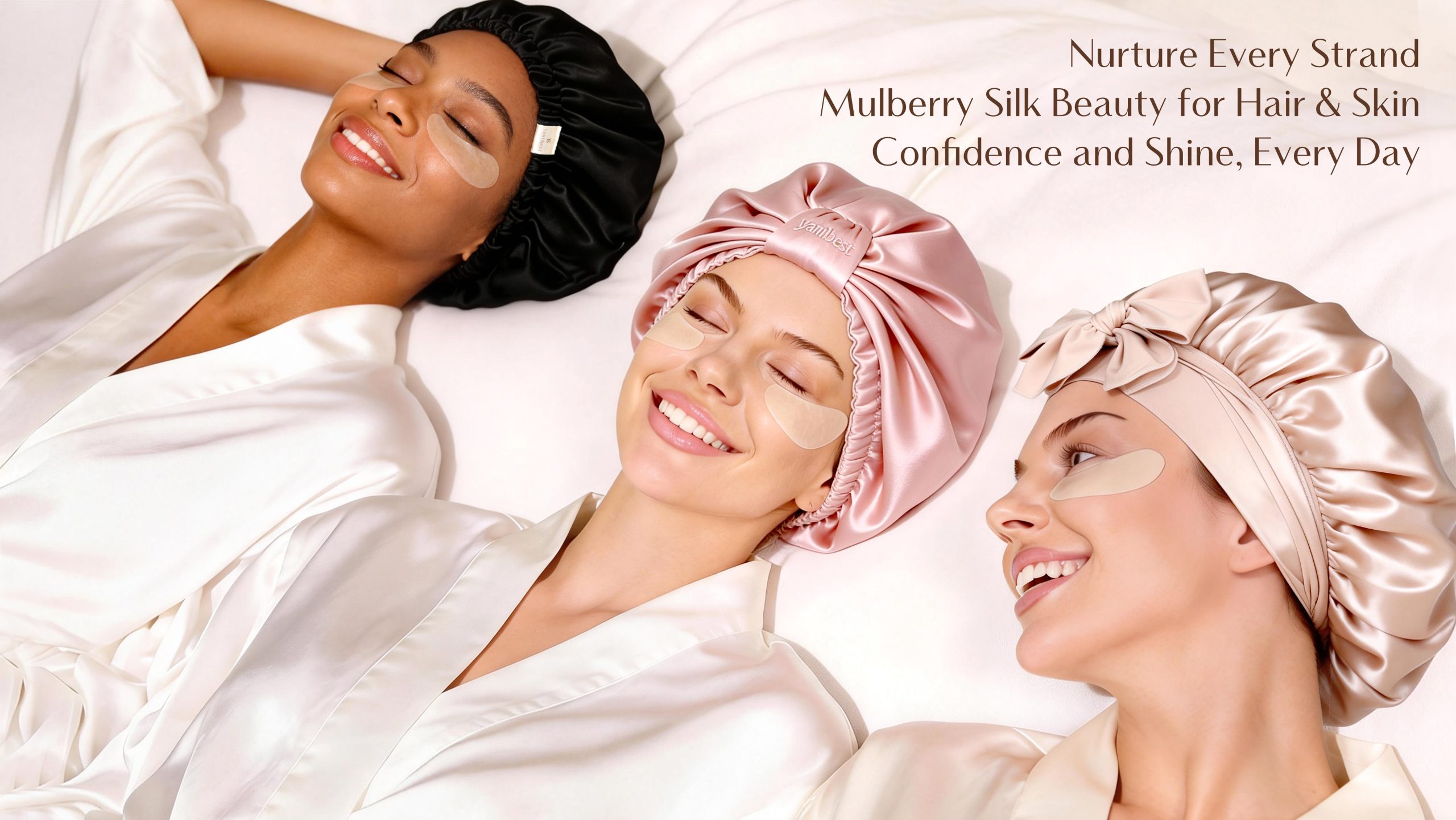
Why the lining matters to you
If you want a beanie that keeps hair, skin, and scalp comfortable without flattening styles, the lining is the decision point — think of it like how a silk sleep mask protects delicate skin while you rest. Start by listing what you need: warmth, breathability, reduced friction for hair, and a soft feel next to sensitive skin. From my time assisting customers at a Brooklyn sleep boutique, I saw how a sleep eye mask or similar silk accessory can transform nightly comfort, and the same principle applies inside a beanie; that practical experience shapes the advice below.

Match the silk type to your priorities
Mulberry silk is the standard to look for. It’s smooth, has long fibers, and resists pilling. If you want longevity and less friction for hair, choose a mulberry silk lining with a momme weight around 16–22 — heavier feels more substantial, lighter breathes better. Call out vendors if their product page omits “mulberry” or momme weight; transparency matters and I’ll politely ask for it when customers need clarity.
Fit, stretch, and seam placement
Check how the lining is attached. A lining that’s sewn into the seam and follows the crown avoids bunching. Look for a tested stretch band that holds the beanie without creating a pressure rim; aim for even compression across the forehead and back. If you wear glasses or headphones, test for bulk at the ears — seams there feel worse over time. Try a beanie on for at least five minutes; small pressure points become obvious fast.
Construction details that affect daily wear
Inspect stitch density and lining coverage. A single thin silk panel can slip; overlapping panels with flatlock seams stay put. For cold climates, a two-layer approach (wool outside, silk inside) gives warmth without the itch. If you run warm at night or commute in variable weather, prioritize breathability over heavy insulation.
Care basics and common mistakes
Silk hates heat and rough agitation. Hand-wash in cool water with a mild detergent or use the machine’s delicate cycle inside a mesh bag. Never tumble-dry silk-lined items; air-dry flat to keep shape. A common mistake is using strong detergents or bleach — they dull fibers and shrink lining. If stains appear, treat gently with a spot cleaner rather than aggressive scrubbing.
Alternatives and what you trade off
Satin can feel similar but often uses shorter synthetic fibers and wears faster; it’s cheaper but less breathable. Blended linings (silk-synthetic mixes) can add durability but reduce silk’s hair-friendly benefits. If animal-derived silk isn’t acceptable, look for plant-based silk alternatives and ask sellers about fiber origin and testing. I’ll help customers weigh these trade-offs when they tell me which feature matters most.
A short, practical checklist before buying
Ask these questions: Is the lining labeled “mulberry silk”? What’s the momme weight? Are seams flat and lining secured? Can I test for pressure points around ears and forehead? How should I wash it? If any answer’s missing, request the detail — transparency signals quality and makes returns less likely.
Final practical note
Your beanie’s lining determines comfort more than color or knit pattern. When you choose a mulberry silk–lined beanie with clear construction and care guidance, you get a piece that protects hair, reduces friction, and lasts through regular use — exactly the kind of thoughtful product I recommend to readers and the customers I help at yanibest.