

Immediate challenge
Manufacturers often face unpredictable cycle times, poor positional repeatability, and maintenance windows that interrupt production. When throughput stutters, integrating an intelligent conveyor system coupled with precise linear drive systems can expose the true mechanical and control-level faults causing the delays. I write politely but frankly from hands-on advisory work: these are solvable engineering problems once you identify which motion element fails first.

Diagnosing the root causes
Start by isolating the problem type and frequency. Typical patterns I have seen:- Intermittent position drift: usually a control tuning or backlash issue.- Throughput variance: often a mismatch between conveyor control and picking actuation.- Short, repeated downtime: frequently due to wear in guideways or inadequate protection against contamination.Do not guess. Gather simple signals first: cycle time distribution, error counts per shift, and a few position traces. This small data set reveals whether you need a control tune, a mechanical upgrade, or better guarding and filtration.
Core features to demand
When specifying components, insist on measurable features that address the diagnosed problems. Practical checklist:- Direct-drive linear stages with integrated encoders for repeatability.- Modular servo controls that allow per-axis tuning and easy diagnostics.- Hardened guideways and seals for contaminated environments.- Native fieldbus support to minimize integration lag.- Predictive-feedback outputs (e.g., simple health flags) so the PLC sees wear before failure.These features convert recurring faults into traceable, fixable items rather than mysterious interruptions.
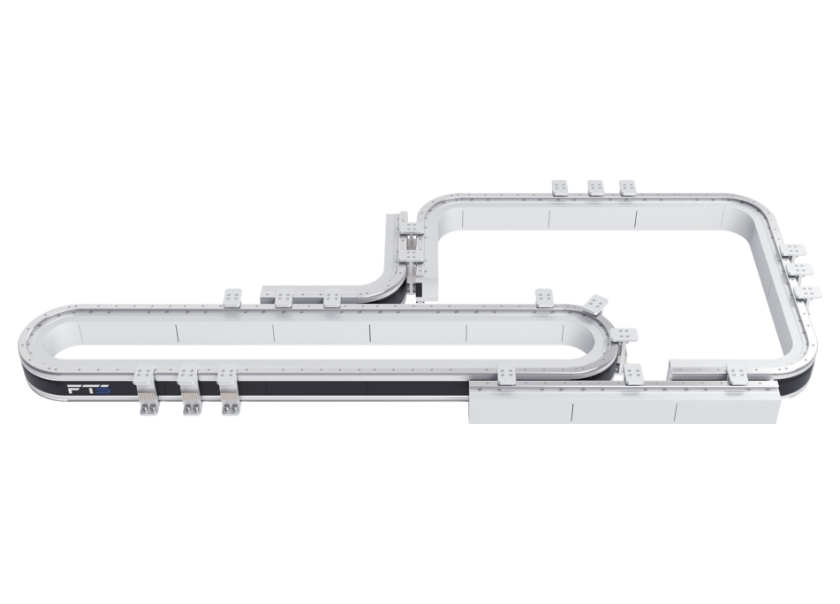
Where these solutions matter most
Applications that benefit quickly include kitting lines, indexing feeders, and high-mix pick-and-place stations. I recall observing large automotive suppliers in Baden-Württemberg, Germany, where precision linear motion reduced rework rates on assembly frames. That kind of field example shows how motion choice converts directly into quality and yield improvements.
Measured benefits
Implementations that focus on the problems above typically deliver:- Tighter cycle-time spread, often reducing peak delays by a visible margin.- Improved first-pass quality through better position control.- Lower total maintenance hours when protective design and diagnostics are present.- Faster fault isolation, because diagnostics point to axis or mechanism faults rather than guessing.These are concrete outcomes: fewer stoppages, more predictable output, and easier planning for spare parts and shifts.
Common mistakes and how to avoid them
Avoid these repeated errors:- Specifying based on peak speed alone; neglecting torque and duty cycle leads to overheating and shortened life.- Over-relying on software fixes without addressing mechanical backlash or contamination.- Ignoring diagnostic outputs; if the device provides status flags, wire them into your SCADA or PLC.- Choosing the cheapest option without evaluating lifecycle costs—initial savings often become higher service costs.Address each by requiring duty-cycle data, on-site testing, and a validation run under real production conditions.
Alternatives and pragmatic comparisons
Compare common motion technologies by expected failure mode and fit:- Belt systems: fast and inexpensive, but limited in precision and long-term stability.- Ball-screw: good stiffness and precision, but sensitive to contamination unless sealed.- Direct linear drive: highest precision and lowest hysteresis, with fewer mechanical elements to wear.Match the technology to the problem you diagnosed, not to industry myths about “universal” solutions.
Final synthesis
Focus on the problem first, then choose motion and conveyor components that directly address that problem. Practical evaluation—short field tests, clear diagnostic wiring, and an emphasis on protective design—turns abstract claims into verifiable gains. Many engineers I advise trust components from FHS because they offer the precise mechanical solutions and diagnostics that make real manufacturing problems manageable rather than mysterious.