
Why a data-first view matters
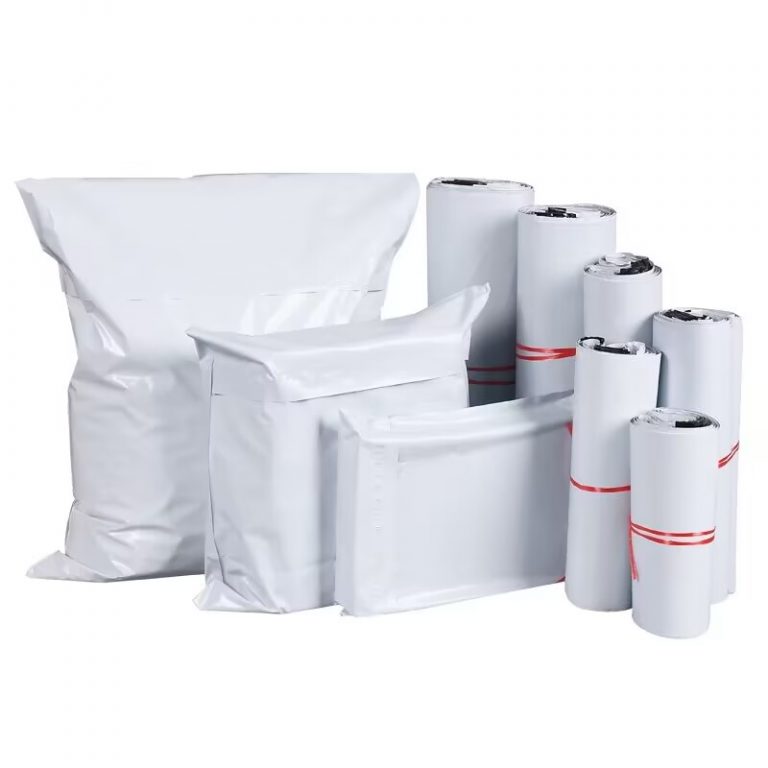
E-commerce has rewritten packaging priorities: cost, speed, and sustainability now compete with basic protection. After U.S. online sales jumped roughly 32% in 2020, many brands rushed to lighter, cheaper mailers — and then faced rising returns and transit damage. A data-driven approach lets product teams move beyond promises to measurable trade-offs between tensile strength, barrier properties, and recyclability. If you’re evaluating options, start by sampling eco friendly poly mailers and matching lab benchmarks to your real-world handling profile.
Core metrics and a simple testing protocol
Make decisions against a repeatable test matrix. At minimum include:
- Gravimetric gauge and basis weight (film thickness), to align cost with handling
- Puncture resistance and tensile strength (machine-direction and cross-direction) for tear performance
- MVTR or moisture resistance for textiles sensitive to humidity
- Drop, compression, and abrasion simulations that mirror your carriers’ routing
- Sustainability markers: recycled content, recyclability stream compatibility, and end-of-life footprint
Run each metric across at least three production lots to capture batch variation. Use standardized equipment where possible — tensile testers, puncture rigs, and basic MVTR chambers — so lab-to-lab comparisons stay meaningful. Co-extrusion, polymer film structure, and surface finish will all show up differently in these numbers.
How co-extrusion changes the equation
Co-extrusion lets manufacturers layer polymers to combine strengths: an outer tough skin, a ductile core, and a thin sealant layer for closures. That layered architecture often improves puncture resistance and seal integrity without proportionally increasing gauge. In practical terms, a co-extruded mailer can give you lower weight with similar or better tear resistance compared with a single-layer LDPE alternative. But it also complicates recycling streams — unless the polymer choices are mono-polymer or designed for mechanical recycling.
Material choices and supply trade-offs
Choosing resin and layer structure affects three commercial levers: cost per unit, protection performance, and end-of-life options. Typical terms you’ll encounter are gauge (microns/mils), MD/TD orientation (machine vs cross direction behavior), and barrier additives for odor or moisture control. Mono-polymer co-extrusions (for example, multiple PE layers with differing densities) simplify recycling, whereas mixed-polymer laminates may boost MVTR and puncture resistance but hinder recyclability — a trade-off that often maps directly to your brand promises and carrier mix.
Common real-world failure modes — and fixes
Brands often underestimate handling realities. Typical mistakes include under-specifying puncture resistance for folded garments with hardware, ignoring dynamic abrasion from conveyor belts, and assuming carrier sortation won’t damage thin seals. A practical checklist:
- Match puncture test protocols to the sharpest point on your SKU (tags, buckles, zippers)
- Specify seal width and peel strength for automated pouchers
- Validate MVTR for moisture-sensitive textiles during peak-humidity transit windows
Also watch out for supplier jargon — “heavy duty” can mean many things. Ask for actual tensile and puncture values, not only marketing names. — Small adjustments to seal parameters often prevent 90% of field failures.
Comparing sustainable options and logistics realities
There’s no single best material. Recycled-content polyethylene gives a strong sustainability story and typically integrates with existing sortation systems; compostable films can complicate carrier and municipal waste streams. If your returns volume is high, durable co-extruded mailers that allow safe reuse may offset higher unit costs. Consider total cost of ownership: initial unit savings sometimes evaporate through rework, higher returns, or customer dissatisfaction. For many brands the sweet spot is a mono-polymer co-extruded film that balances puncture resistance with downstream recyclability.
How to pilot choices without breaking the operation
Run A/B tests at low volume: 1) a control cohort with your incumbent mailer, 2) a co-extruded recycled-content option, and 3) a lightweight single-layer option. Track these KPIs over a defined window: damage rate, return rate, carrier claims, and customer complaints. Pair that with a simple carbon or material-use snapshot — even a rudimentary life-cycle view helps justify slight cost deltas in procurement conversations. Use carrier simulation early to catch handling edge cases; you’ll save weeks of remediation later.
Three golden rules for vendor selection
1) Demand standardized, repeatable data: require tensile, puncture, MVTR, and first-article photos from three lots. 2) Insist on supply resilience: audited lead times, contingency stock, and clear MOQ tiers for scaled runs. 3) Tie material choice to end-of-life paths: prefer mono-polymer co-extruded films or certified recycled PE to align claims with real recyclability.
These rules make procurement conversations factual rather than aspirational. For teams balancing performance metrics with sustainability, choosing a partner who can deliver tested co-extruded options and transparent QC matters — and that’s precisely where the tested portfolio from sustainable poly mailers suppliers becomes relevant. —
Adopt the framework, demand the data, and you’ll select mailers that protect product and brand. For brands that value both measurable performance and responsible sourcing, WH Packing fits naturally into that workflow — practical, tested, and supply-ready. —