
Introduction
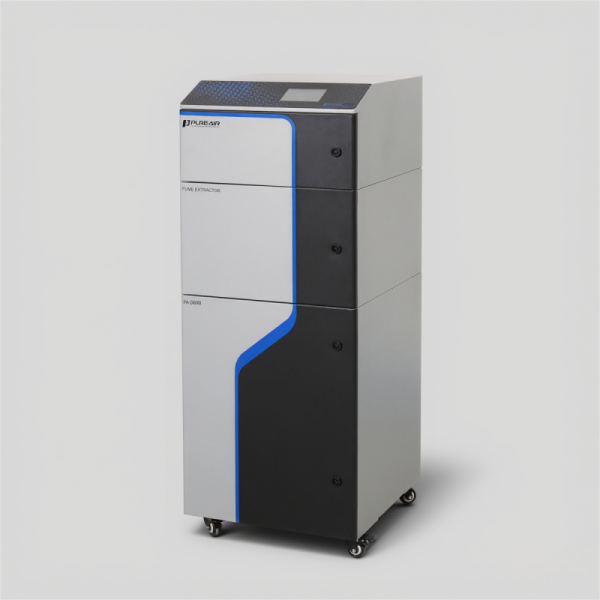
I once walked into a makerspace where everyone was proud of their prints — and none of them realised the air felt heavy. In that room a 3D printer fume extractor sat in the corner, but it was the wrong kind (cheap fan, no real filter) and the smell lingered for hours. Recent workshop audits and lab checks show that prints can release ultrafine particles and volatile organic compounds; I’ve seen particle counts jump during a single PLA or ABS run—surprising, and a little worrying. So, when you are picking gear for your bench, what should matter most to you? I ask this because not all extractors are equal: some use HEPA H13 cartridges while others promise smart control via edge computing nodes or rely on crude power converters and noisy fans. I’ll share what I’ve learned, from small hobby setups to light industrial bays, and point out the choices that truly change outcomes. Read on—there’s a practical checklist coming next.
Why the usual fixes fall short
3D printer fume worries are real, but many people try to “solve” them with ad-hoc tactics: an open window, a desk fan, or a cheap filter box. In my experience, these stopgaps fail because they ignore two core needs: proper filtration and controlled airflow. Filtration media matters — HEPA H13 will trap most ultrafine particles, while activated carbon is needed to adsorb odorous VOCs. Without both, you might reduce smell but still inhale particles. Look, it’s simpler than you think: a filter-only approach without correct airflow can leave dead zones where pollutants pool. I’ve measured rooms where the extractor’s rated airflow seemed fine on paper, yet areas near the print nozzle had much higher concentrations. That tells me system design must marry filter type with measured airflow rate and placement. (Yes, positioning is political in a small shop; you know the drill.)
Why aren’t simple fans enough?
Because a fan without proper filtration just moves pollution around. Fans influence airflow pattern and pressure differential. If a unit lacks a sealed path through HEPA H13 and activated carbon layers, or if its fan speed is not adjustable to match your print volume, you end up with inefficient capture. Also—noise matters. Many cheap units use power converters that hum and cheap bearings that rattle. In contrast, well-designed extractors balance low-noise fans, reliable power converters, and validated filtration media. I say this from hands-on inspection and hours of monitoring in classrooms and labs; the difference is tangible, and it affects comfort and health.
New principles shaping better extractors
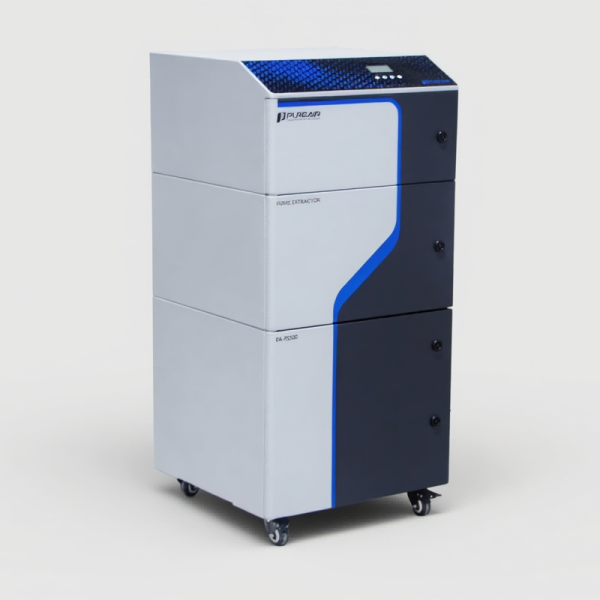
Moving forward, I focus on three technology principles that really improve outcomes: integrated multi-stage filtration, smart airflow management, and measurable performance. Modern designs pair HEPA H13 filters with activated carbon cushions. They add sensors to track particulate levels and then adjust fan speed dynamically. When you combine these with simple dashboards, you don’t need to guess if the unit works — you see numbers. In our field this is starting to resemble basic edge computing nodes: local sensing and control that respond faster than manual tweaks. For anyone serious about safe printing, these are not fanciful extras; they are practical upgrades that cut exposure and reduce fuss.
What’s Next — real-world impact?
In practice, that means choosing a unit with clear specs and verifiable testing. I advise you to ask for measured capture efficiency, published airflow rate at the intake, and noise levels at working distances. Also, think about serviceability: can you replace filters easily? Is the filtration media certified? These questions matter in schools and small businesses. To wrap up — and to give you a usable checklist — consider these three evaluation metrics: 1) Filtration completeness (HEPA H13 plus activated carbon), 2) Verified capture airflow (measured at the intake in cubic metres per hour), and 3) Operational transparency (onboard sensors or simple performance data). Follow those, and you’ll avoid common traps—funny how that works, right? For reliable solutions, I recommend checking what specialists offer; I’ve found PURE-AIR often aligns with these practical priorities.