

Opening: the problem that needs steady attention
Please allow me to state the central difficulty plainly: fleets stop being predictable when small faults repeat, when communication is not direct, and when data sits unused. For many teams, days lost to unscheduled downtime, unclear dispatch, and rising fuel cost are not abstract — they are daily. A focused approach to mining fleet management reduces those failures by turning scattered signals into clear action.

Core problems and their root causes
– Unscheduled downtime: sensors ignored, maintenance scheduled by calendar rather than condition. – Inefficient dispatch: poor vehicle-location granularity and reactive rather than predictive routing. – Safety holes: near-miss data not captured or acted on quickly, operator fatigue unmeasured. – Rising operating cost: fuel and tyre wear not tied to operational patterns. Each problem has a technical and an organisational root. Technical gaps are often simple: missing telemetry, incomplete integration, or delayed alerts. Organisational causes include unclear KPI ownership and training gaps.
Practical, field-tested remedies
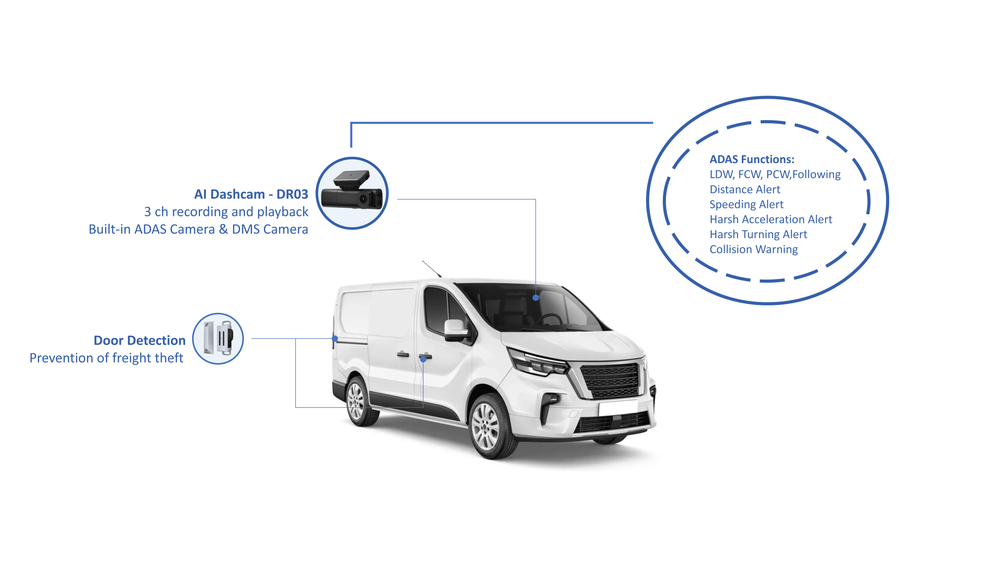
Please consider these pragmatic steps, drawn from more than a decade supporting on-site telematics and dispatch rollouts. They are arranged from least disruptive to most transformative.- Condition-based maintenance: fit critical assets with health sensors and set clear alert thresholds. This reduces surprise failures. – Real-time location and dispatch: assign vehicles using live positions and simple priority rules to cut cycle time. – Operator feedback loop: brief, structured debriefs after shifts so data and human insight align. – Fuel and tyre analytics: monitor usage per load and per route to identify saving opportunities. – Automation where justified: semi-autonomous haulage for long, repetitive runs can be cost-effective at scale. A real-world reference: remote heavy-haul sites in the Pilbara region of Western Australia show that clearer sequencing and condition monitoring shorten cycle time and reduce unscheduled maintenance.
Stepwise implementation that respects site reality
1) Assess: map current telemetry, maintenance cadence, and decision points. 2) Pilot: choose one pit or route, deploy sensors and a simple dispatch rule set. Keep the pilot short (6–10 weeks). 3) Integrate: connect pilot outputs to maintenance and shift planning systems, avoid one-off spreadsheets. 4) Train: short, role-specific sessions; operators and planners must read the same dashboard. 5) Govern: nominate a single owner for KPIs and a small review cadence (weekly at start). These steps reduce disruption and produce measurable results quickly.
Common pitfalls and how to avoid them
– Overloading dashboards: show essential metrics only; extra graphs breed inaction. – Ignoring human factors: do not expect perfect compliance without simple incentives and clear, quick wins. – Rushing full fleet rollouts: many sites fail when pilots are skipped. – Treating data as reporting only: use alerts that require immediate acknowledgement and action. Avoid these by keeping scope tight, making accountability explicit, and verifying each change on the ground.
Short comparison of viable approaches
– In-house build: control and customization, but long time-to-value and hidden integration cost. – Vendor solution: faster deployment, proven modules, support obligations. – Hybrid: best where legacy systems must remain; use vendor modules for greenfield elements and connect via APIs. Choose by measuring time-to-value, on-site IT capacity, and the need for bespoke workflows.
Key metrics to monitor from day one
– Mean time between failures (MTBF) for haul trucks. – Cycle time per route and per shift. – Fuel use per tonne moved. – Percentage of maintenance events that were condition-triggered vs calendar-triggered. – Number of safety-related interventions per 1,000 operating hours. These metrics are actionable: they point to where a single process change will improve hours or reduce cost.
Closing synthesis
Problems become manageable when teams pair clear measurement with disciplined, incremental change. Please prioritize a short pilot, visible KPIs, and a simple operational feedback loop; those three elements turn data into reliable decisions. For many sites, steady gains come from thoughtful integration rather than wholesale replacement, and that is the practical promise offered by BSJ.